

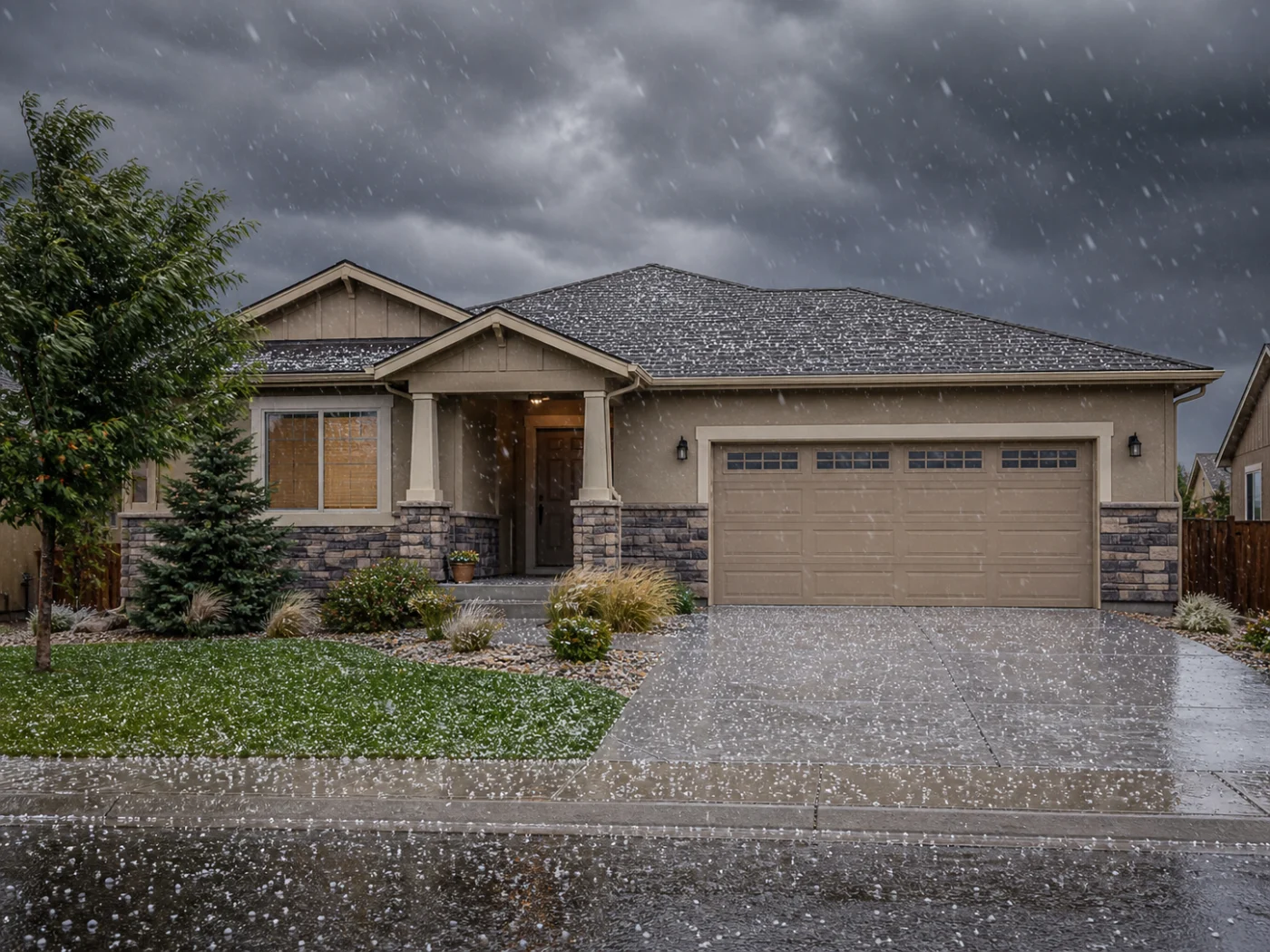
Hail can leave behind more than a few dents. Small impacts can strip granules, crack shingles, and open paths for water long before a leak shows up inside. This guide explains how residential roofing in Aurora, CO, is affected by Colorado hailstorms, what damage to look for, and how Columbine Roofing & Solar helps identify whether repair or replacement makes more sense.
Aurora, CO Residential Roofing And
Colorado Hailstorm Damage
What Hail Really Does To
A Roof Over Time
If you are trying to understand how hail affects residential roofing services in Aurora, CO, the biggest problem is that damage is not always easy to spot from the ground. In some cities, storms can move in fast, hit hard, and leave a roof looking mostly intact while weak points start forming across the surface.
Columbine Roofing & Solar handles residential roofing, storm damage roof repair, and emergency roofing across the Denver Metro. We see hail damage that starts small, then turns into leaks, stained ceilings, and larger repair bills when moisture gets below the shingle layer.
That matters in the area because the area is part of Colorado’s hail alley. Add strong UV exposure, sharp temperature swings, and freeze-thaw cycles, and a roof that took one hard storm can keep breaking down long after the clouds clear.
A shingle does not need to be torn off to be compromised. A bruised surface, displaced granules, or a small puncture can shorten roof life and leave the layers underneath exposed to water.
Why Aurora, CO Hailstorms Hit
Residential Roofing Hard
Colorado storms do not just bring hail. They often bring wind, sudden temperature drops, and fast weather changes that put stress on the full roof system.
On asphalt roofs, hail can crack the mat, loosen protective granules, and leave soft impact marks. Once those granules are gone, sunlight and weather hit the shingle surface harder, and deterioration speeds up.
We also check metal flashing, roof vents, ridge areas, and gutters because hail does not stop at the shingle field. A dented flashing edge or a displaced seal at a penetration can become the point where water starts to seep in.
Here is the cause-and-effect homeowners deal with after a storm:
A small hail strike weakens the surface, the next freeze-thaw cycle widens that weak spot, and then water gets under the roofing material. What starts as a minor impact can turn into a leak path.
If you have already noticed granules collecting in gutters, that can be a sign the roof is wearing faster than it should. Make sure you keep an eye out for other signs that you need roof repair to avoid dealing with more costly issues after storm-related damage.
How Hail Damage In Aurora, CO Can Affect Your
Residential Roofing After The Storm
Some damage is visible from the yard. You may see dark spots where granules have been knocked away, cracked shingle tabs, bent metal edges, or dents on gutters and downspouts.
Inside the home, the signs often show up later. A faint ceiling stain, damp insulation in the attic, or a musty smell after rain can all point back to storm damage above.
We also find damage that homeowners usually cannot confirm safely on their own. Loose shingles, lifted edges, damaged flashing, and weak spots around roof penetrations are easy to miss without getting close enough to inspect the surface.
This is another cause-and-effect problem that catches people off guard: hail bruises the roof, then regular sun exposure and cold nights keep stressing the same spot. By the time a stain appears indoors, the damage has often spread beyond the original impact area.
If your roof has taken repeated seasonal storms, it also helps to understand how to prepare your roof for hail season, so small vulnerabilities do not stack up year after year.
How We Inspect Hail-Damaged Residential
Roofing In Aurora, Colorado
The first step is a professional inspection. We look for visible hail strikes, but we also check the supporting details that often tell the real story.
That includes shingle condition, flashing lines, penetrations, gutter runoff areas, and spots where water tends to linger. We are looking for loose components, punctures, granule loss, and wear patterns that suggest the storm opened up existing weak points.
We also consider the roof’s age and current condition. A newer roof with isolated damage may be a solid candidate for residential roof repair, while an older roof with broad impact damage may be closer to replacement.
If storm damage is spread across multiple elevations, or if the roof was already nearing the end of its service life, storm damage roof repair may not be the only conversation. In some cases, residential roof replacement is the cleaner long-term answer.
Our goal is to show what the storm changed, what is still sound, and where moisture risk is most likely to grow. That gives homeowners a clearer path instead of guessing from dents alone.
When Repair Makes Sense Vs. Replacement For
Residential Roofing In Aurora, Colorado
Not every hailstorm means a full new roof. If damage is limited to a smaller area and the rest of the system is still in good shape, repair can restore protection without replacing the whole surface.
Replacement starts to make more sense when hail damage is widespread, when shingles are brittle from age, or when multiple roof components are failing together. We see this on roofs where granule loss, cracking, flashing wear, and water entry risk all show up in the same inspection.
Timing matters here. Waiting too long can let a manageable repair turn into wet decking, interior staining, or a larger moisture problem that costs more to correct.
That is especially true in Colorado, where hail is only part of the stress. UV exposure keeps drying materials out, and winter freeze-thaw cycles can keep opening the same damaged spots. A roof that looked stable after the storm may not stay that way.
If your roof was hit by hail and you need residential roofing in Arapahoe County, CO, contact Columbine Roofing and schedule a free roof inspection before small damage spreads.
Homeowners’ Questions About Residential
Roofing In Aurora, Colorado
After a hailstorm, most homeowners want to know what damage matters, what can wait, and what needs a closer look. Here are a few common questions we get from homeowners.